
Yesterday, I went over the art pieces that Sally mentions by name in her narration in my short story “The Passion of St. George.” Today, I thought I’d say a bit more about some of the artists whose names and styles are featured in the story.
Early on, Sally compares the print of St. George and the dragon she buys to the work of Frank Frazetta , specifically, the covers he painted for the book series Conan the Barbarian.
Frank Frazetta (1928-2010) is a widely celebrated fantasy and sci-fi illustrator who worked in the 20th century. Called the “godfather of fantasy art,” his portfolio includes comic books, book covers, movie posters, album covers, etc., etc. By his own admission, Frazetta never actually read any of the Conan the Barbarian novels. Nevertheless, his style had an enormous influence on the aesthetic of the sword and sorcery genre.
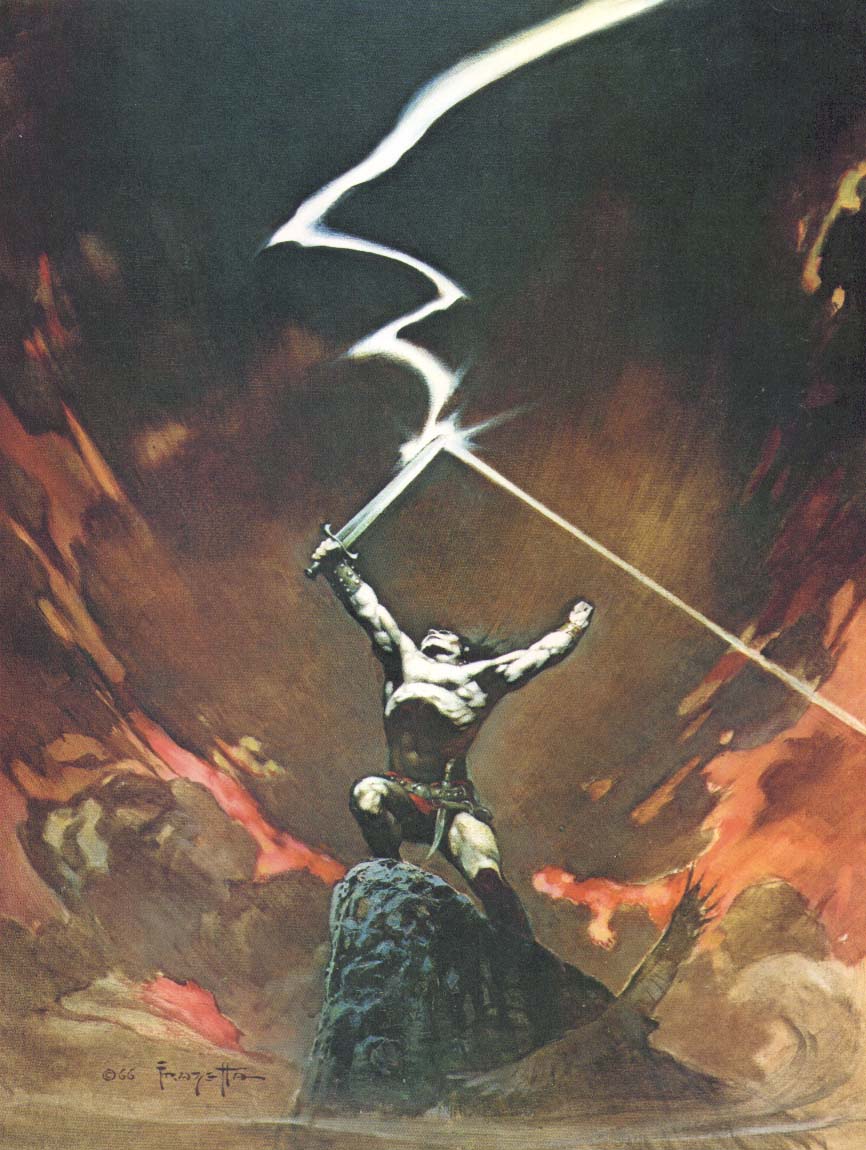
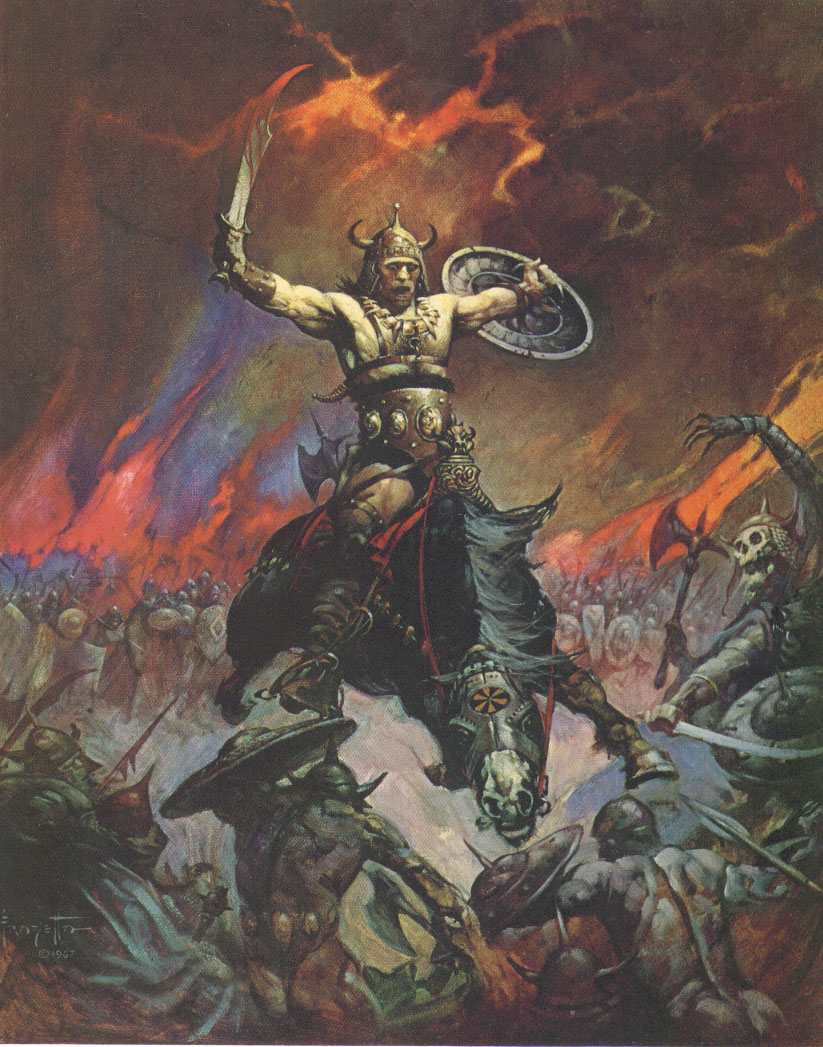

Frazetta’s style is not only by a high degree of contrast between dark and light and a dynamic sense of motion but also by a certain kind of erotic energy. Nudity, both male and female, is common in his work, and even when his subjects are clothed, there is a sort of larger-than-life pathos to the way their bodies are depicted. The body is idealized in its moments of struggle.
Frazetta’s depictions of heroes battling monsters was an especially strong source of inspiration for “The Passion of St. George,” especially his illustrations of his heroes battling snakes.


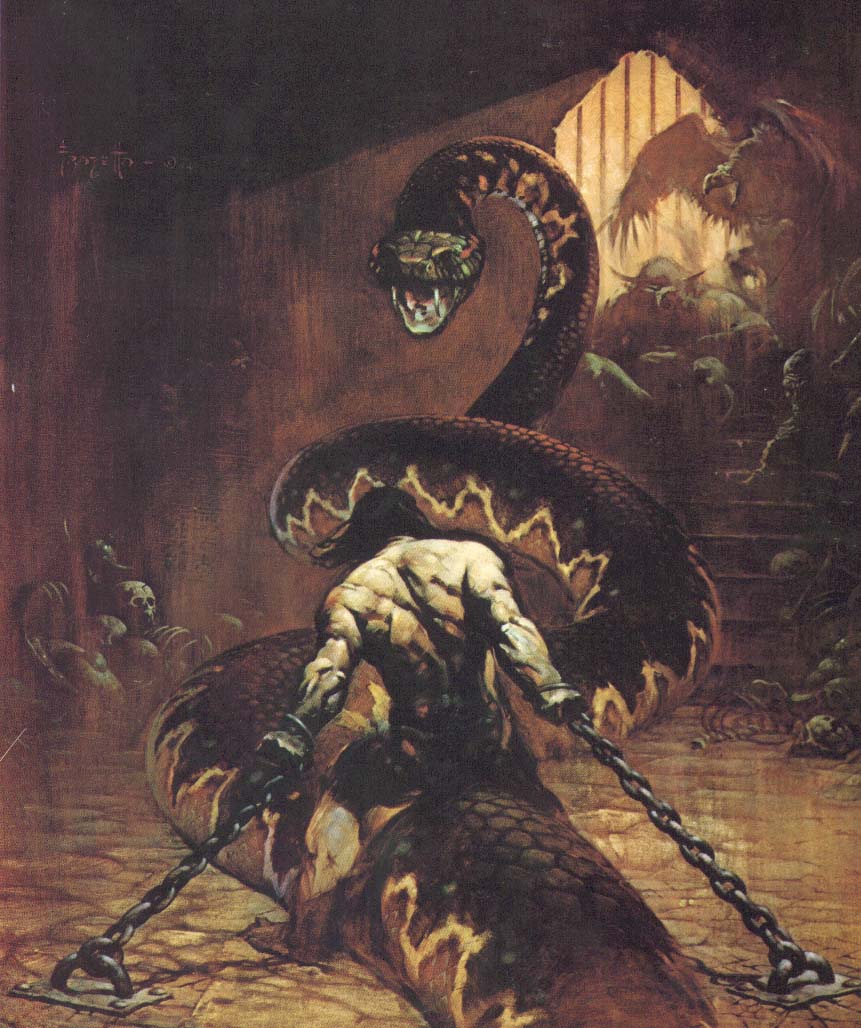
If any one single painting of Frank Frazetta’s can be said to have had the biggest influence on “The Passion of St. George,” it would probably be the painting below, simply titled, Serpent. The first time I ever saw this image subject’s pose, the sense of tension between the struggling bodies, and the contours of his exposed flesh all struck me as incredibly erotic.

Much later in the story, Sally goes to an art museum and tours the Renoir exhibit that’s currently in town. Pierre-August Renoir (1841-1919) was one of the leading artists of the Impressionist movement, an art style defined by visible brush strokes and emphasis on accurate depictions of light. Impressionist art can be said to be “deliberately flawed” in that it imitates the imperfection of the human eye by incorporating blurriness and haziness in its aesthetic.
Due to the influence of the cursed painting on her mental state, Sally speaks rather dismissively of Renoir despite loving his style in the past. Renoir is a master, of course, but his style is so radically different from the style in Sally’s beloved print of St. George that she comes to view it unfavorably.
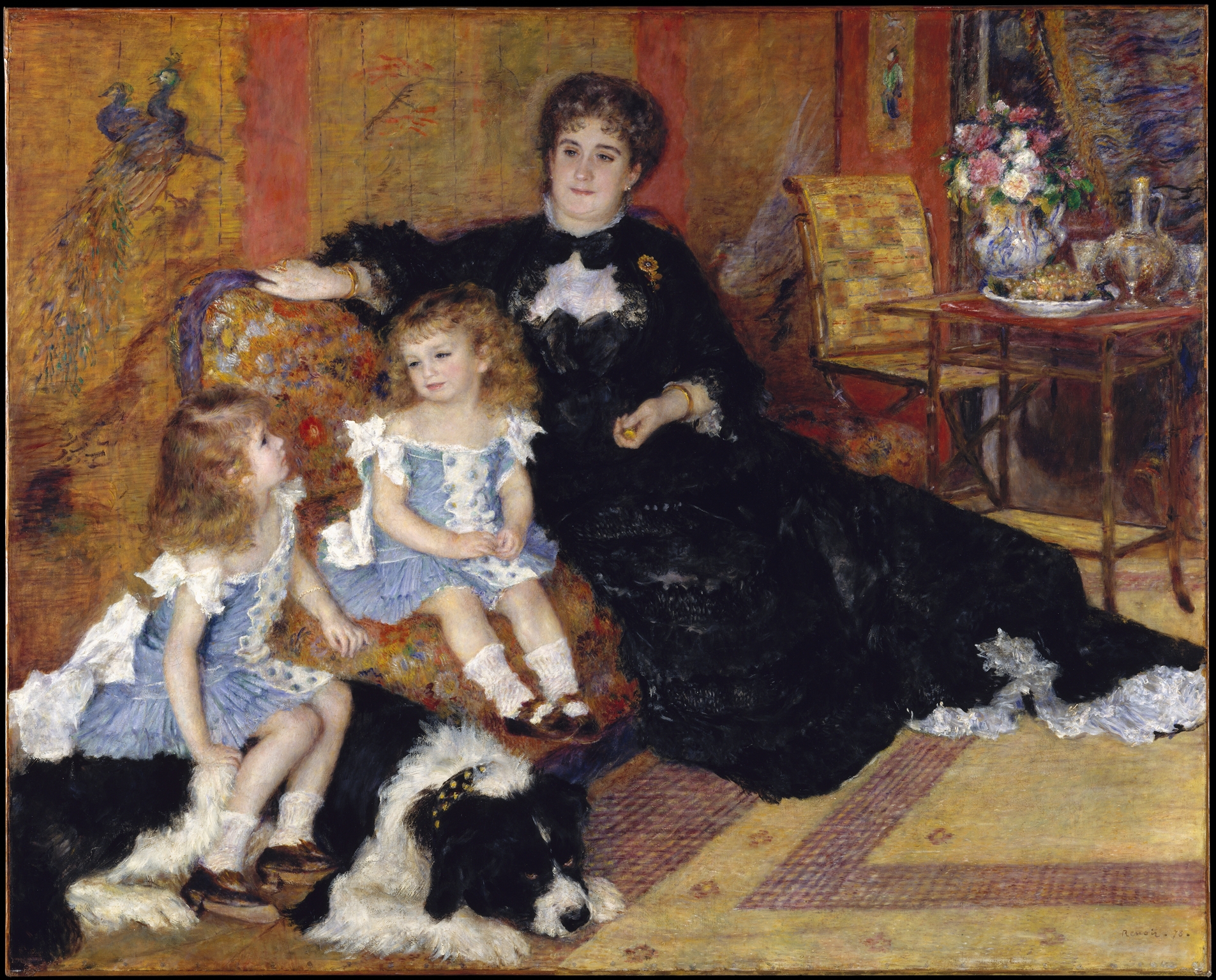


Sally speaks especially disparagingly of Renoir’s nudes, which, though they may not be to her taste, are also very pleasing to look at.


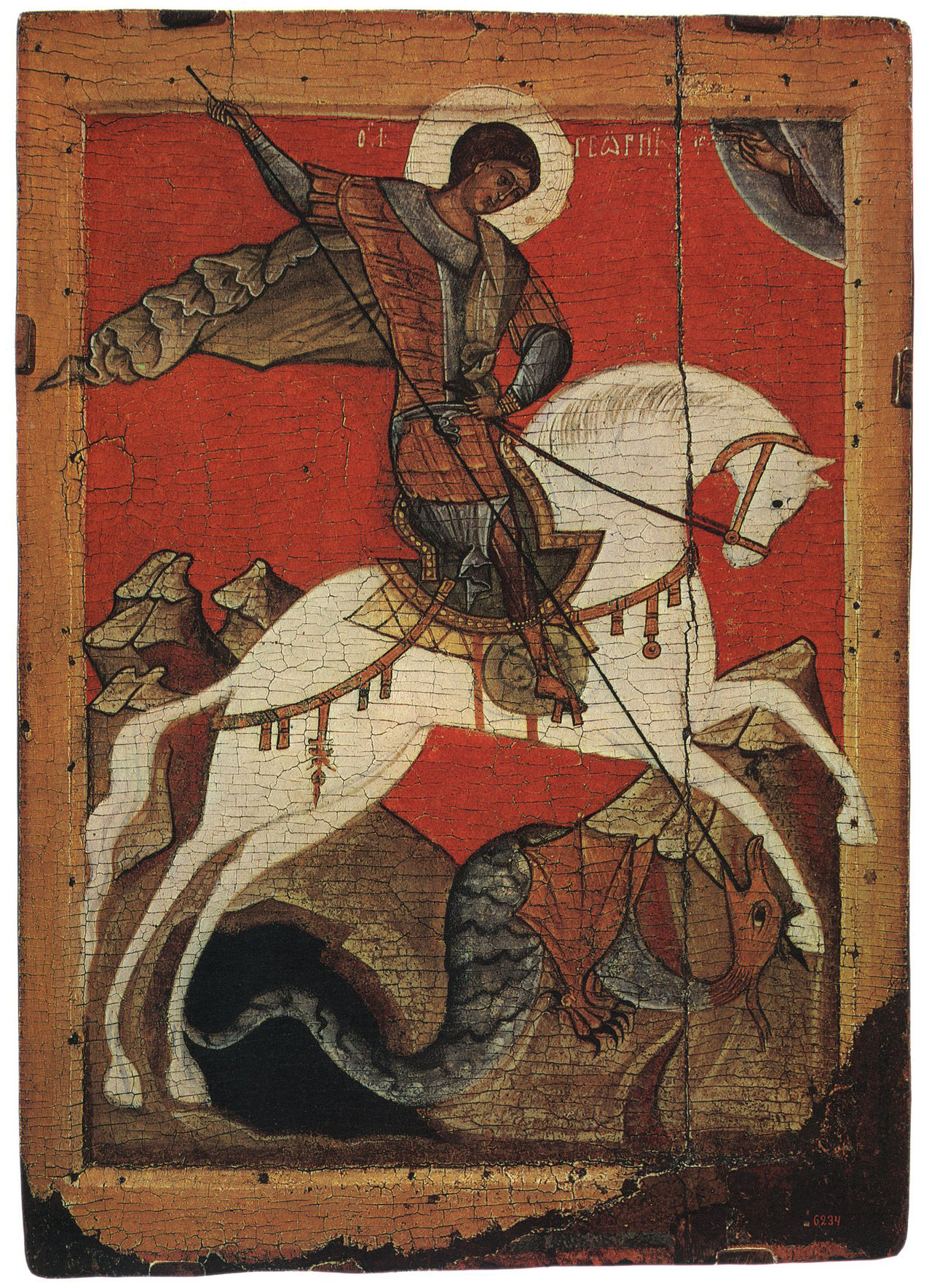
Finally, I want to include some images of the titular St. George himself. As Sally explains in her narration, the medieval legend of St. George slaying the dragon who menaced the Libyan city of Silene has been a recurring motif in art for centuries. St. George is often depicted mounted on his horse as he stabs at the dragon snarling up at him from below.


The reason Sally finds the print of St. George in the story so radically different from the norm is because it depicts St. George as weak, exhausted and vulnerable to the dragon. When I wrote “The Passion of St. George,” I didn’t think that any artist had ever painted a St. George like the one in my story, but when I went looking for an image to use for the cover of my story on Amazon, I found this painting by the British artist Briton Rivière (1840-1920), which depicts St. George lying on the ground exhausted after his battle with the dragon.

When I stumbled across this painting on Wikipedia, I was immediately struck by how similar it was to the print described in my story. True, the horse lying on the ground is black, not white, it still has its head attached, and unlike in Sally’s print, St. George seems to have emerged from the confrontation victorious, but the huge, imposing body of the dragon and the prostate figure of St. George on the ground are eerily similar to the fictional image of the story. This St. George bears little resemblance to the St. George of tradition. Instead of St. George radiant and invincible we see a St. George who’s been pushed to his very limit, a St. George who is not triumphant in his moment of victory but merely relieved, relieved that the deadly struggle is over.
Here, we see of a bit of what Sally admired in her own St. George, a man whose weakness makes him all that much more human.
~Brittany
 Brittany Taylor Barber